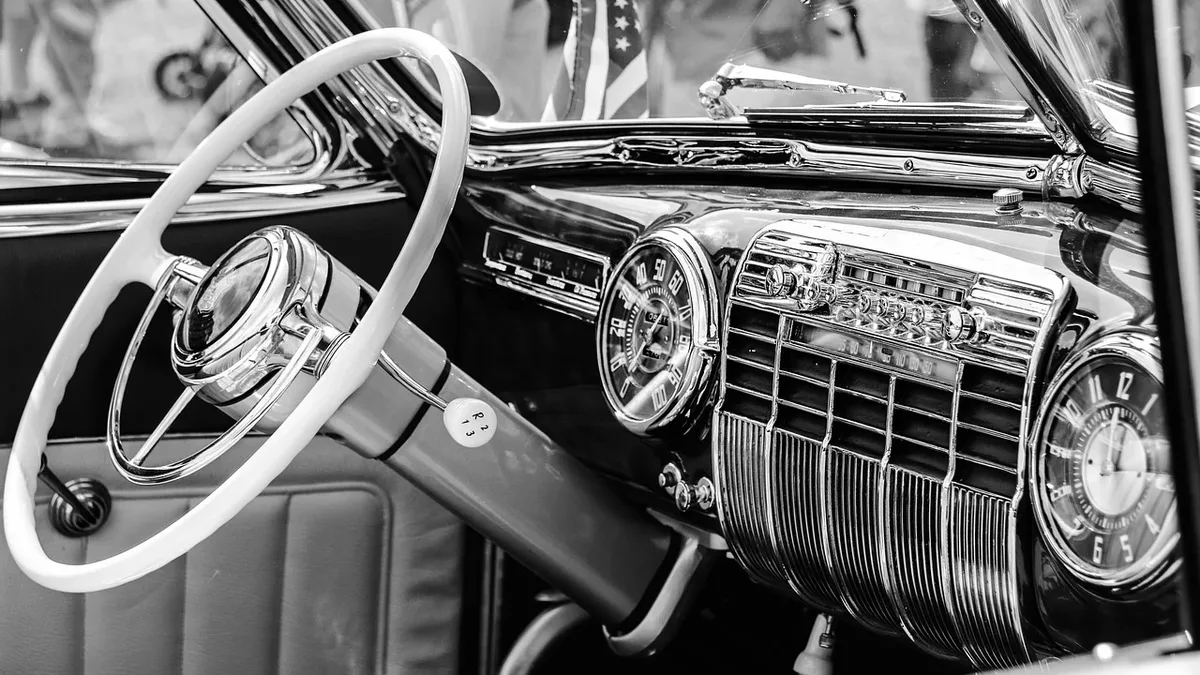
Post War
| Country of origin | United Kingdom |
|---|---|
| First created | 1948 |
| Original use | Lightweight sports and club racing car |
| Engine | 4-cylinder, side-valve |
| Chassis | Ladder frame |
| Body construction | Aluminum over ash frame |
| Suspension | Independent front, live axle rear |
| Production | Approximately 15,000 units |
Origin and history
The Post War era in automotive history originates from the major industrial regions of Western Europe, North America, and Japan, commencing in the late 1940s. This period directly follows the conclusion of the Second World War, which had suspended civilian automobile production for nearly half a decade. Factories previously dedicated to military machinery were reconverted, often with tooling and designs that were pre-war in origin but now built with modernized techniques. The era is defined by a surge in mass personal mobility as economies rebuilt and consumer demand exploded. It spans roughly from 1946 through the early 1960s, a time of rapid technological evolution and stylistic change. The provenance of a Post War car is heavily influenced by its country of manufacture, as national industries responded to distinct economic conditions and material constraints.
What it is designed for
These vehicles were fundamentally designed for practical, affordable personal and family transportation to meet pent-up global demand. Many early Post War models were engineered for durability and simplicity to endure poor road conditions and limited service networks. They served as essential tools for economic recovery, facilitating travel for work and commerce in expanding suburbs and rural areas. Beyond basic utility, design also began to incorporate stronger elements of style and comfort to appeal to a growing middle-class market. For many buyers, a Post War car represented the first new automobile they could purchase after years of austerity. The design philosophy gradually shifted from pure utilitarianism to incorporating more horsepower and convenience features as prosperity increased through the 1950s.
Development and versions
Initial development was often a swift update of pre-war platforms to get production lines operational, leading to versions that were visually similar to 1939 models. True Post War designs, clean-sheet engineered, began to appear by the early 1950s, featuring modern unitary construction and improved suspension. Version development was frequently annual, with manufacturers adding model lines, more powerful engine options, and luxury trim packages. The era saw the proliferation of distinct body styles within a single model line, such as sedans, station wagons, hardtop coupes, and convertible versions. Engine development progressed rapidly from modest inline-six and flathead V8 engines to high-compression overhead-valve V8s and efficient small-displacement units in Europe. By the era's end, versions had evolved to include nascent safety features, automatic transmissions as common options, and increasingly flamboyant styling elements.
Overview
A Post War automobile is typically a body-on-frame construction with rear-wheel drive, though unitary construction became prevalent in European models. Powertrains ranged from economical four-cylinder engines to powerful V8s, with three-speed manual transmissions being standard and automatics gaining market share. Styling evolved from rounded, ponton forms that eliminated separate fenders to the tailfins and chrome excess of the late 1950s, then toward cleaner lines in the early 1960s. Interior appointments started as spartan but grew to include vinyl and cloth upholstery, heater units, and AM radios as common fittings. The market was segmented into entry-level, mainstream, and luxury categories, with clear distinctions between domestic and imported cars. Survivors today vary from pristine, low-mileage examples to weathered daily drivers, with condition and originality being paramount to provenance and value.
What to know
Provenance is critical and is documented through a chain of ownership, original purchase paperwork, maintenance records, and factory build sheets. Authenticity regarding matching-numbers components, correct period-correct finishes, and factory-installed options significantly impacts desirability and price. Values are established by public auction results and private sales, not by inflated asking prices, with factors like celebrity ownership or documented historical significance creating premiums. Rust is a universal enemy due to manufacturing processes and lack of corrosion protection, so a thorough inspection of structural points is essential. Mechanical parts are generally robust and simple, but reproduction parts availability varies wildly between obscure models and mass-produced classics. Understanding the specific model's production changes and common factory flaws is necessary for accurate evaluation and preservation.
Common questions
How do I verify if a car's engine and chassis numbers are original and matching? What are the most reliable sources for establishing a car's production date and factory specification? Where can I find archived auction results to establish a realistic market value for a specific model and condition? Which areas of the vehicle's structure are most susceptible to fatal corrosion that compromises safety and value? What are the implications of a car having been repainted in a non-original color or having a replaced interior trim? How does the presence of period accessories, like factory air conditioning or specific wheel covers, affect the valuation compared to a base model?
Pros and cons
A primary pro is the relative mechanical simplicity, making many repairs feasible for a knowledgeable owner without specialized diagnostic equipment. These cars offer a direct, tactile driving experience and a tangible connection to a transformative historical period, which many find rewarding. Cons include generally poor fuel economy, braking performance that is inadequate by modern standards, and a near-total lack of crash safety structures. A common mistake is underestimating the cost and effort of a proper restoration, which often far exceeds the car's market value upon completion. Buyers frequently regret purchases where significant rust or previous poor-quality repair work was overlooked in favor of superficial cosmetic appeal. Ownership can be frustrating for those unprepared for the constant maintenance, sourcing of rare parts, and the need for defensive driving due to limited performance envelopes.
Who it suits
This era suits the hands-on enthusiast who enjoys maintenance and incremental restoration as a core part of the hobby, not just driving. It is ideal for the historian or collector who appreciates the design and engineering narrative of the mid-20th century industrial age. These cars can suit a pragmatic driver seeking a straightforward, characterful classic for local shows and occasional tours, without expectations of modern convenience. They are less suited to individuals seeking reliable, daily transportation or those who are uncomfortable with the physical effort required to operate older vehicles. The Post War market suits buyers with space for storage and a network of specialist suppliers or mechanics, as dealer support is non-existent. It ultimately suits someone who values authenticity and provenance over flawless perfection, understanding that patina and honest wear are part of the object's story.