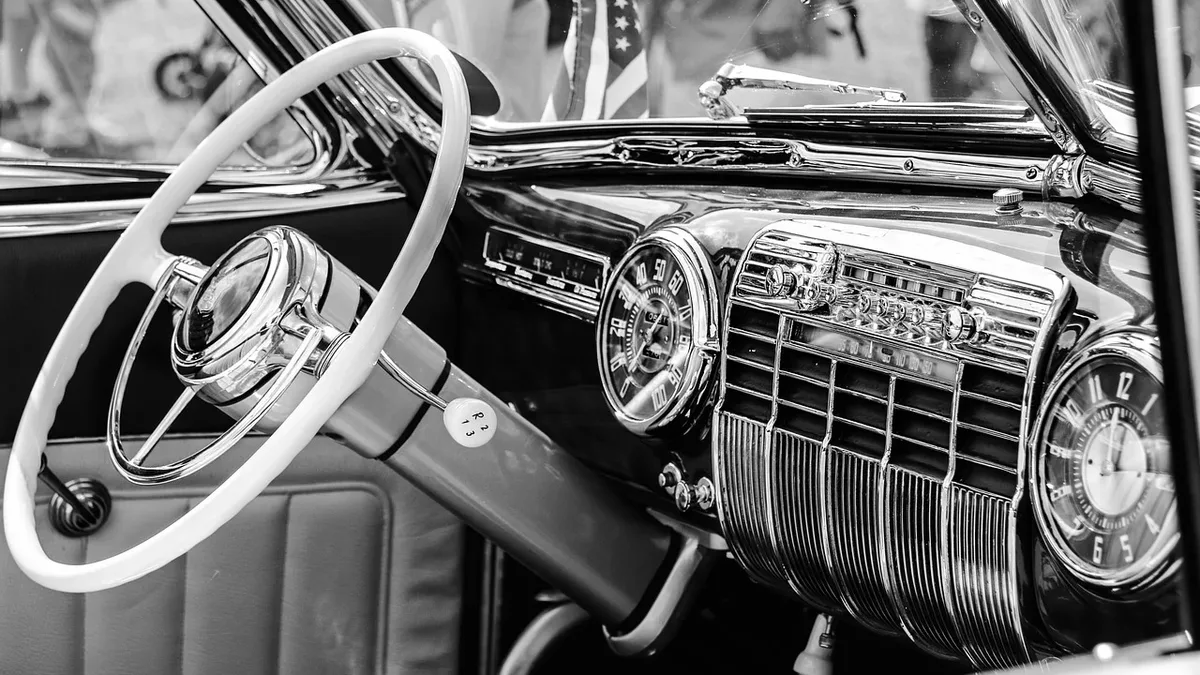
Pre War
| Country of origin | United Kingdom |
|---|---|
| First created | 1930s |
| Original use | Grand touring |
| Body style | Saloon, Tourer |
| Engine | Inline-six |
| Drive configuration | Front-engine, rear-wheel drive |
| Construction | Separate chassis with coachbuilt body |
Origin and history
The term "Pre War" in automotive collecting specifically refers to motor cars manufactured before the conclusion of the Second World War, roughly spanning from the late 19th century through 1945. Its origin as a distinct classification emerged in the latter half of the 20th century within the collector car market, primarily in North America and Europe, to categorize vehicles from this technologically formative period. The era encompasses everything from pioneering brass-era horseless carriages to the sophisticated, streamlined machines of the late 1930s. Market segmentation further divides this into "Veteran" (pre-1905), "Edwardian" (1905-1918), and "Vintage" (1919-1930) periods, with post-1930 cars up to 1945 often termed "Post-Vintage Thoroughbreds". The historical significance lies in the rapid evolution of automotive design, engineering, and societal impact during these decades. Provenance for these cars is critically important, with documentation of original ownership, competition history, or notable restorations significantly affecting value.
What it is designed for
Pre War cars were designed primarily as practical transportation in an era before widespread automotive adoption, with engineering solutions focused on reliability and durability over poor roads. Higher-end marques were designed explicitly as symbols of social status and technological achievement for the wealthy, showcasing custom coachwork and advanced features. A significant subset was designed for competitive motorsport, including Grand Prix racing, hill climbs, and endurance trials, which served as a public proving ground for technical innovations. Commercial vehicles from this period were designed for specific utilitarian tasks, such as delivery vans, lorries, and early buses, with an emphasis on rugged construction. Many simpler, lower-powered models were designed explicitly for ease of maintenance and repair by their owners or local blacksmiths, as dedicated repair networks were sparse. The design philosophy was largely engineering-led, with aesthetics often derived directly from functional components and chosen body styles.
Development and versions
Development throughout the Pre War era was extraordinarily rapid, moving from hand-cranked, single-cylinder engines to complex multi-carburetor straight-eights with synchromesh gearboxes. Early versions were often sold as a rolling chassis, with customers separately commissioning bespoke bodywork from independent coachbuilders, leading to immense variety even within a single model. Major technological versions include the shift from tiller to steering wheel control, the adoption of electric lighting over acetylene or oil lamps, and the transition from wooden artillery wheels to wire-spoked or pressed steel wheels. The introduction of mass production techniques, most famously by Ford with the Model T, created a distinct version pathway focused on simplified, affordable transportation for the masses. Sporting versions were developed with higher compression engines, improved braking systems, and lightweight bodies, often directly from factory competition departments. The late Pre War period saw the development of unitary construction, independent front suspension, and aerodynamic streamlining, which defined the final versions before wartime production halted.
Overview
A Pre War car is a mechanically straightforward yet often temperamental machine that requires a specific mindset to own and operate. Its value is a composite of originality, condition, historical importance, brand prestige, and aesthetic appeal, with exceptional provenance commanding substantial premiums. The market for these cars is distinct from later classics, with a smaller, more knowledgeable collector base that prioritizes historical integrity over perfection. Authenticity in components, finishes, and materials is typically more valued than a concours-level restoration that uses modern techniques or parts. These vehicles exist on a spectrum from preserved, patinated originals to sympathetically restored examples and, less desirably, heavily reconstructed or rebodied cars. Operational overviews must account for non-synchromesh gearboxes, weak braking performance by modern standards, and suspension designed for the road surfaces of its time, making them unsuitable for high-speed modern traffic.
What to know
Transaction prices are highly individual and are best understood by reviewing public auction results for comparable cars, factoring in the buyer's premium which can add a significant percentage. A car with a continuous, documented history from new will always be worth more than an identical model with gaps in its provenance, regardless of cosmetic condition. Mechanical parts for many Pre War cars can be scarce, and expertise for proper repair is specialized, making a pre-purchase inspection by a marque expert essential. The concept of "matching numbers" is less rigid than in later eras, as engines were often swapped or rebuilt by factories; historical documentation of such work can be acceptable. Ownership often involves joining a dedicated one-make club, which is invaluable for technical advice, sourcing parts, and authenticating details. Understand that insurance, storage, and maintenance costs are substantial, and the car should be viewed as a historical artifact requiring custodianship rather than a simple recreational vehicle.
Common questions
The most common question is whether a Pre War car can be used for regular driving, to which the answer is a qualified yes, but only in suitable conditions and with mechanical sympathy. Collectors frequently ask about the impact of a non-original body or engine on value, which is generally severe unless the replacement is period-correct and well-documented. Many inquire about the investment potential, which is unpredictable and should not be a primary motivation, as the market is illiquid and driven by passion rather than financial trends. A recurring question concerns the safety of operating such a vehicle, highlighting the need for diligent maintenance of braking and steering systems and an avoidance of high-speed, high-traffic situations. New enthusiasts often ask how to verify authenticity, which requires cross-referencing factory records, original handbooks, period photographs, and expert examination. People commonly misunderstand the term "restored," which can range from a meticulous, historically accurate concours effort to a cosmetic refurbishment that hides structural or mechanical issues.
Pros and cons
A significant pro is the deep sense of historical connection and the mechanical honesty of these cars, where every component's function is visible and understandable. The community of fellow owners and experts is typically exceptionally knowledgeable, generous, and passionate, enhancing the ownership experience. A major con is the relentless maintenance requirement; these are not "drive and forget" vehicles, and neglect leads rapidly to expensive failures. Many buyers regret underestimating the physical effort required to drive pre-synchromesh cars and the poor braking performance, which can make touring stressful. The common mistake is purchasing based on appearance alone, without a thorough mechanical and structural assessment, leading to discovery of severe corrosion, cracked frames, or worn-out major components. Another con is the very limited usability, confining most driving to organized club events, quiet country roads, or private property, which can frustrate owners seeking a more practical classic.
Who it suits
This marque and era suits the hands-on historian or engineer who enjoys the process of preservation and understanding old technology as much as, or more than, driving. It is ideal for collectors with significant resources for proper storage, maintenance, and insurance, who view the car as a preserve-and-study project. The Pre War car suits an individual who values participation in a niche community and derives satisfaction from events like tours, concours d'elegance, and technical seminars. It is a poor fit for someone seeking a reliable weekend cruiser or a high-performance vintage driving experience, as these cars demand constant adjustment and offer limited dynamic capability. This era best suits the patient owner who does not require immediate parts availability and is willing to commission the manufacture of missing components. It is ultimately for a custodian, not just an owner, who appreciates the responsibility of maintaining a piece of industrial history for future generations.