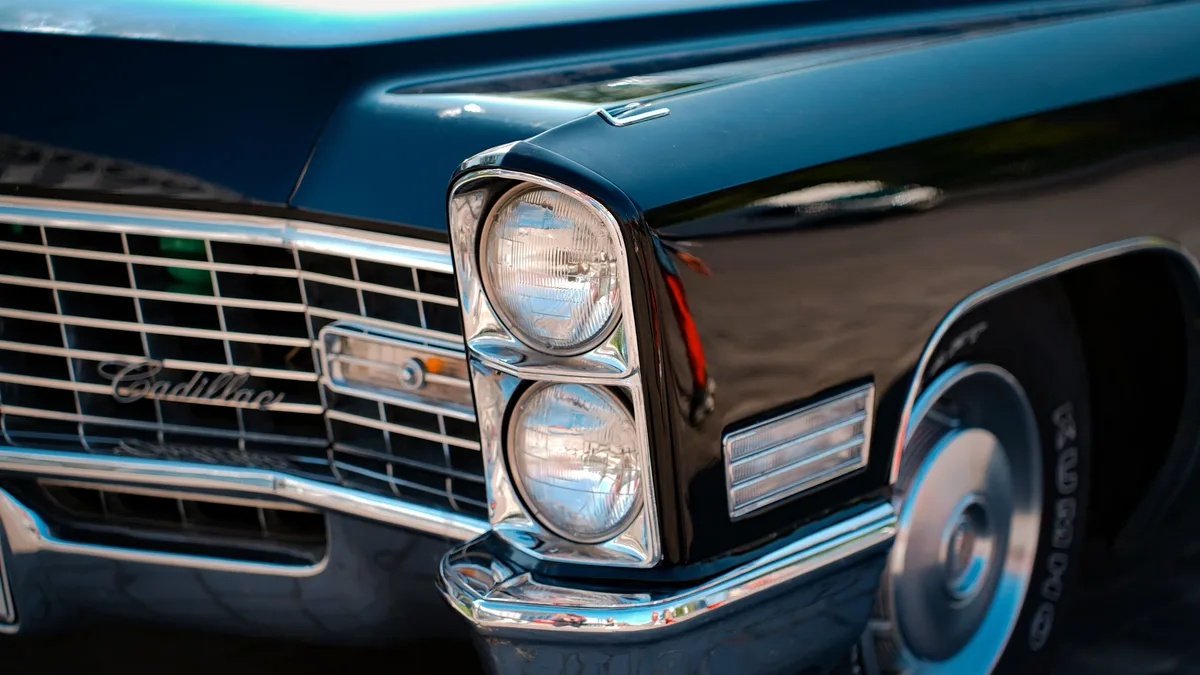
The Sixties
| Years of production | 1960-1969 |
|---|---|
| Body style | 2-door saloon |
| Engine layout | Front-engine, rear-wheel drive |
| Engine type | Inline-four |
| Engine capacity | 1.0 to 1.3 litres |
| Power output | Approximately 40 to 60 bhp |
| Transmission | 4-speed manual |
| Market position | Affordable family car |
Overview
The Sixties refers to the era of automotive production from 1960 through 1969, a period marked by significant technological evolution and stylistic exuberance. This decade witnessed the peak of the American muscle car, the refinement of the European grand tourer, and the widespread adoption of unitary body construction. Engineering shifted from rudimentary postwar designs to more sophisticated overhead-valve V8 engines, independent rear suspensions, and the gradual introduction of disc brakes. Styling transitioned from the tailfins and chrome of the late 1950s to cleaner, more linear profiles, culminating in the rise of the fastback silhouette. The market was characterized by a vast array of models with yearly updates, making model-year specificity crucial for provenance. Vehicles from this era are now foundational to the collector car hobby, with values spanning from affordable entry-level classics to seven-figure blue-chip investments.
What to know
Provenance for a Sixties car is primarily established through its Vehicle Identification Number (VIN), trim tag, and often factory build sheets or ownership history. Authenticity hinges on matching-numbers components, particularly the engine block, though this standard is more rigidly applied to high-performance models than base sedans. Rust is the most common and critical structural ailment, typically found in rocker panels, floor pans, quarter panels, and trunk compartments due to limited corrosion protection. Mechanical systems often require comprehensive refurbishment, including brake hydraulics, fuel lines, carburetors, and aging electrical wiring which can become brittle. The quality of a prior restoration or the originality of a preserved survivor significantly impacts value, often more than the model itself in a given category. Understanding the model's place in the hierarchy of its year, such as distinguishing a standard model from a rare performance package, is essential for accurate valuation.
Common questions
A frequent inquiry concerns the real-world driving experience, which typically involves vague steering, soft braking by modern standards, and a focus on low-end torque rather than high-revving horsepower. Buyers often ask about reliability and usability, which depends heavily on the specific powertrain and the level of mechanical sorting completed, with simpler inline-six engines generally being more robust than complex, period high-performance V8s. Many question the availability of replacement parts, which is generally excellent for high-volume American models but can be challenging and expensive for obscure European marques or one-year-only components. The investment potential is a constant topic, with values for most models being cyclical and susceptible to generational trends rather than steadily appreciating. Enthusiasts regularly debate the merits of restoration versus preservation, where a perfectly restored car may command a premium, but an untouched, well-documented original can be more desirable. The cost of proper insurance and secure storage is a practical consideration that is frequently underestimated by first-time buyers.
Pros and cons
The primary advantage of a Sixties car is its straightforward, analog mechanical nature, which allows for owner maintenance and repair with basic tools and knowledge, fostering a deep sense of connection. The styling offers a distinct, period-correct presence that is impossible to replicate with modern vehicles, providing immense aesthetic and social enjoyment. A significant drawback is the inherent lack of active safety features, with crude seatbelts or none at all, non-collapsible steering columns, and an absence of crumple zones, making them riskier for regular road use. The common mistake is underestimating the total cost of ownership, where purchase price is often a fraction of the funds required for proper mechanical refurbishment, rust repair, and ongoing maintenance. Those who regret choosing a Sixties car typically purchased a superficially attractive example without a thorough pre-purchase inspection, leading to catastrophic hidden rust or a non-original, pieced-together drivetrain that erodes value. The ownership experience can be frustrating for individuals seeking modern convenience and reliability, as these vehicles demand tolerance for quirks, periodic adjustments, and a dedicated space for tinkering.
Who it suits
This era suits the hands-on hobbyist who enjoys the process of maintenance and incremental improvement as much as, or more than, the act of driving. It is ideal for the historian or purist who appreciates the automotive design and engineering milestones of the decade and values historical accuracy above modern performance upgrades. The Sixties car fits an owner with secure, dry garage space and the disposable income to address issues as they arise without relying on the vehicle for daily transportation. It is a poor match for someone seeking a turnkey, worry-free classic car experience or who intends to use the vehicle for long-distance touring without a support network. The era also appeals to the niche collector who specializes in a specific marque, model, or model year, deriving satisfaction from deep expertise and the pursuit of rare options or documentation. Ultimately, it suits an individual who accepts the car as a piece of moving history, with all its accompanying charms and responsibilities, rather than a modern appliance.