Audi's Diesel Revolution at Le Mans
Audi engineers, despite dominating Le Mans with gasoline power, developed a radical aluminum-silicon alloy diesel V12 for the R10 TDI, proving diesel's
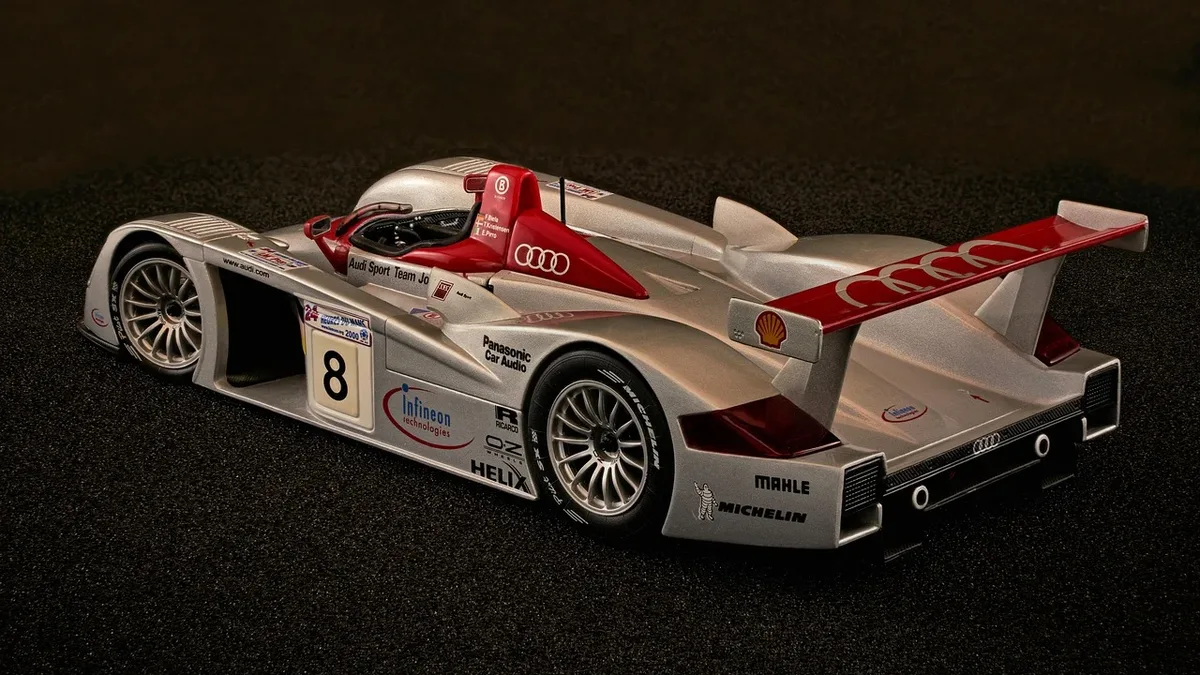
Audi's engineers turned endurance racing logic on its head in 2006 by entering two diesel-powered prototypes at the 24 Hours of Le Mans. They did this despite having a dominant gasoline-powered car, the Audi R8 LMP, which had won five of the previous six editions of the race.
Between 2000 and 2005, the Audi R8 LMP was the absolute terror of endurance racing. Equipped with a 3.6-liter twin-turbo V8 gasoline engine, it won 63 of the 80 races it contested worldwide. Its reliability was legendary, with a modular rear end allowing a full gearbox swap in just over three minutes. The only interruption to this dynasty came in 2003 when the Bentley Speed 8 won, a car which itself benefited from Audi technology and used an evolution of the Audi V8 engine.
The Spark of an Idea
The idea for a diesel race car began with an informal conversation in a bar in January 2001. Ulrich Baretzky, then head of engine technology for Audi Sport, was having a beer with Daniel Poissoneaux and Daniel Perdrix, officials from the Automobile Club de l'Ouest (ACO). Baretzky noted that nearly half of all new Audis sold were diesel-powered. If Le Mans was meant to be a technology laboratory, he reasoned, why shouldn't the prototypes run on the same fuel customers used?
Baretzky took the idea to Wolfgang Hatz, head of engine development, who embraced it immediately. The final and most important endorsement came from Wolfgang Ullrich, the legendary head of Audi Motorsport. Ullrich saw technical potential and a marketing opportunity to shows diesel's sportiness in the American Le Mans Series and to change the fuel's image as slow, dirty, and noisy. As Martin Winterkorn, then chairman of Audi's board, said at the car's 2005 unveiling, "The Le Mans project will help our technicians extract even more from TDI technology."
A Daunting Precedent
Audi was not the first to try diesel in endurance racing, but the historical record was not encouraging. In 1949, the French brothers Jean and Jacques Delettrez entered a diesel car at Le Mans using a Delage chassis and a 6-cylinder inline engine producing a mere 70 horsepower; it retired with mechanical failure. In the U.S., Cummins put a diesel on pole position at the 1952 Indianapolis 500, but it also failed to finish. A private team, Taurus Sports Racing, entered a Lola B2K/10 with a Volkswagen Touareg V10 TDI engine at Le Mans in 2004, but it was slow and retired early.
Diesel had a reputation for being noisy, dirty, heavy, and having too narrow a rev range for high-performance competition. Audi persisted because it saw a real thermodynamic advantage it believed was impossible to ignore.
The Aluminum Miracle
The core engineering challenge was weight. Diesel engines operate with very high combustion pressures, traditionally requiring extremely robust iron or vermicular iron cast iron blocks. In a Le Mans prototype, extra kilograms ruin weight distribution and handling.
When the Audi R10 TDI project began, Richard Bauder, head of diesel road engine development, naturally suggested a vermicular iron block like those used in road cars. Ulrich Baretzky vetoed the idea immediately, fearing it would make the engine impossibly heavy. Audi's solution was radical: they developed an entirely new aluminum-silicon alloy block from scratch.
This material had the structural properties to withstand the high pressures of the diesel cycle as well as cast iron but saved dozens of kilograms. While the final weight of this new aluminum engine was still higher than the old R8's gasoline V8, it was a miracle of weight reduction compared to any conventional diesel block of the era.
The result was a longitudinally mounted 5.5-liter V12, equipped with two Garrett turbochargers limited to nearly 3 bar of boost and a Bosch common rail injection system working at an absurd 1,600 bar. The official power output was "over 650 hp," though in practice it exceeded 700 horsepower.