Fiat 130 Maremma Shooting Brake Owned by Gianni Agnelli
A 1974 Fiat 130 Maremma shooting brake, one of three built and once owned by Fiat patriarch Gianni Agnelli, highlights Pininfarina's luxury estate
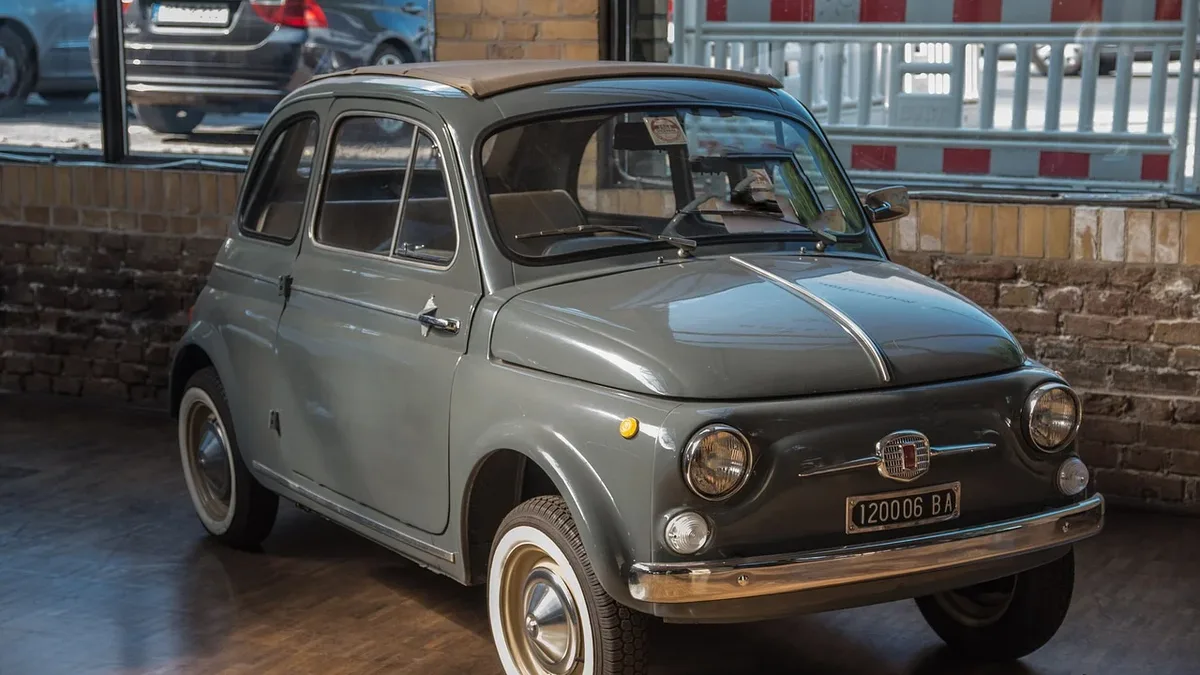
Fiat launched the 130 model in 1969, aiming to compete internationally with luxury rivals from Germany, Britain, and France.
Pininfarina, the design house responsible for the 130 saloon and its 1971 coupé, unveiled a shooting brake variant in March 1974. Named the Fiat 130 Maremma after a coastal region, this estate version was built on the two-door coupé's underpinnings. It featured a distinctive angular rear with a slanted tailgate, louvres ahead of the C-pillar, and a fixed roof spoiler designed to keep the rear window clean.
Pininfarina's Shooting Brake Vision
The Maremma was part of a broader trend for Pininfarina in the early 1970s. The coachbuilder presented several two-door estate concepts based on coupé platforms during this period, including the conceptually similar Peugeot 504 Riviera in 1971. In the same year as the Maremma's debut, Pininfarina also revealed the 130 Opera, a four-door version of the 130 Coupé, at the Paris Motor Show. The company reportedly hoped these designs would persuade Fiat to expand its luxury model lineup.
This expansion never materialized. Sales of the standard 130 saloon and coupé had already disappointed, with only about 19,500 units produced over eight years. The onset of the first oil crisis further dampened European appetite for large, expensive V6-powered cars.
The Three Maremma Examples
Contrary to being a one-off, three examples of the Maremma shooting brake were completed. After its show appearances in Geneva and Turin, one car caught the eye of Gianni Agnelli, the influential leader of Fiat known as 'the Avvocato'. He registered one of the Maremmas in his name in 1975.
This gave Agnelli his second estate based on the Fiat 130 platform; he had already acquired one of the approximately three 130 Familiare woodie-style wagons earlier in the 1970s for use in St. Moritz. He drove the gold-painted Maremma, which featured a luxurious interior with thick velour seats, for three years before selling it to a private collector. This specific car reappeared in 2013 at an exhibition at the Museo Nazionale dell'Automobile in Turin.
The whereabouts of the other two cars are less certain. A second example was long rumored to be in Pininfarina's company museum, but the coachbuilder has denied this. The third Maremma is considered lost, potentially awaiting rediscovery in an Italian barn.
Technical Specifications and Design
The practical Maremma was powered by a 3.2-litre Lampredi V6 engine coupled with a three-speed automatic transmission. Its design details set it apart within the estate segment. The car's tailgate incorporated a ledge that gave it a hint of a notchback profile, making it a unique design exercise.
| Feature | Specification |
|---|---|
| Model Base | Fiat 130 Coupé |
| Engine | 3.2-litre Lampredi V6 |
| Transmission | Three-speed automatic |
| Body Style | Two-door shooting brake |
| Notable Exterior Details | Louvres ahead of C-pillar, fixed roof spoiler, slanted tailgate with ledge |
| Interior Highlight | Thickly padded velour seats (one car had blue checked seat centres) |
| Production Quantity | 3 examples completed |
Despite its potential as a leisure vehicle for Italy's elite, the Maremma remained a footnote in Fiat's history, emblematic of a brief and ultimately unfulfilled ambition to reclaim the luxury market.