Ford's One-Off Mustang V-10 Prototype Revived After Decades
Ford has successfully restarted and dyno-tested its unique, factory-built Mustang V-10 prototype, a one-off car developed in the early 2000s.
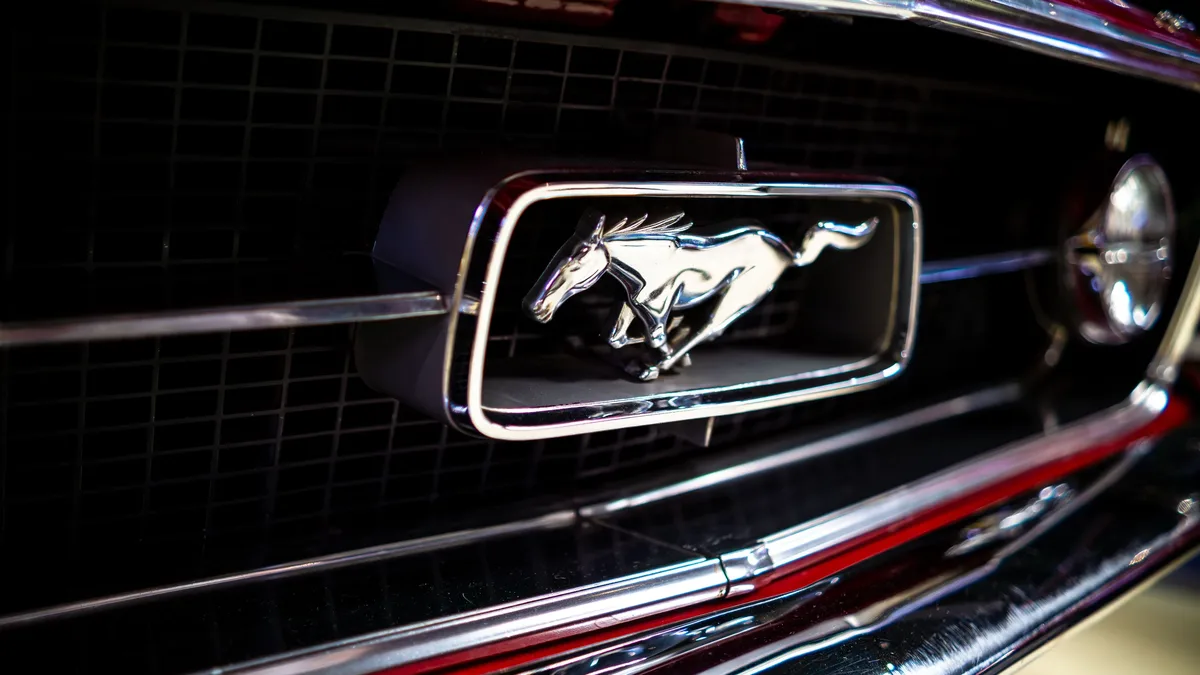
Ford's one-of-one Mustang V-10 prototype has roared back to life after sitting dormant for years. The experimental car, built by a small team of engineers in the early 2000s, was recently restarted and dyno-tested by some of its original creators, achieving 510 horsepower at the wheels.
The project began as an internal engineering exercise. A team wanted to prove Ford could compete with rivals like the Dodge Viper and Chevrolet Corvette. Instead of using an existing truck engine, they modified the Mustang's 4.6-liter modular V-8 block by adding two cylinders, creating a unique 5.8-liter V-10.
Development and Performance
The engine was developed as a potential powerplant for the upcoming Ford GT. With GT prototypes unavailable, engineers installed the V-10 into a leftover 1999 Mustang test mule previously used for Cobra R development. Despite its experimental nature, the car delivered impressive performance for its time.
| Model/Prototype | Quarter-Mile Time | Trap Speed | Notable Feature |
|---|---|---|---|
| Ford Mustang V-10 Prototype (c. 2003) | 12.28 seconds | 117 mph | 5.8L prototype V-10 |
| 2003 Ford Mustang Cobra (Boost) | Slower than prototype | Slower than prototype | 4.6L boost V-8 |
The prototype's quarter-mile performance made it quicker than the then-new, boost 2003 Mustang Cobra. However, Ford shelved the V-10 program. The GT launched in 2005 with a boost 5.4-liter V-8. The one-off Mustang narrowly avoided the crusher multiple times during its years in storage, saved each time by advocates within the company.
The Complex Revival
Ford began the arduous process of reviving the car earlier in 2026. Starting a long-dormant, one-off engine is a major challenge. This V-10 is a blend of Ford, aftermarket, and custom-made parts, meaning broken components might require newly machined replacements. The electronics also needed a complete overhaul.
The effort culminated in August 2026 when the engine fired up for the first time in years. It was then placed on a dynamometer. The dyno run revealed the engine produces 510 horsepower at the wheels. Factoring in typical drivetrain losses suggests the V-10 likely makes well over 550 horsepower at the crankshaft.
More Than Just Numbers
Matt Korczyk, manager of Ford's heritage fleet, emphasized that the numbers only tell part of the story. He described the engine's character, stating, "The V-10 has a sound all of its own. It's raw. Mechanical. It doesn't sound like anything we'd build today."
For Korczyk, the most rewarding aspect was reuniting the original project team. He explained that vehicle preservation is about more than metal. "The car is just the vessel. What you're really preserving are the stories. The people. The ideas. The late nights." The prototype now resides in Ford's heritage collection, a sign of a bold engineering idea that was almost lost.