Lancia Diàlogos concept previewed a divisive
The 1998 Lancia Diàlogos concept pioneered a retro-futuristic style that shaped the brand's controversial 2000s models, like the unsuccessful Thesis.
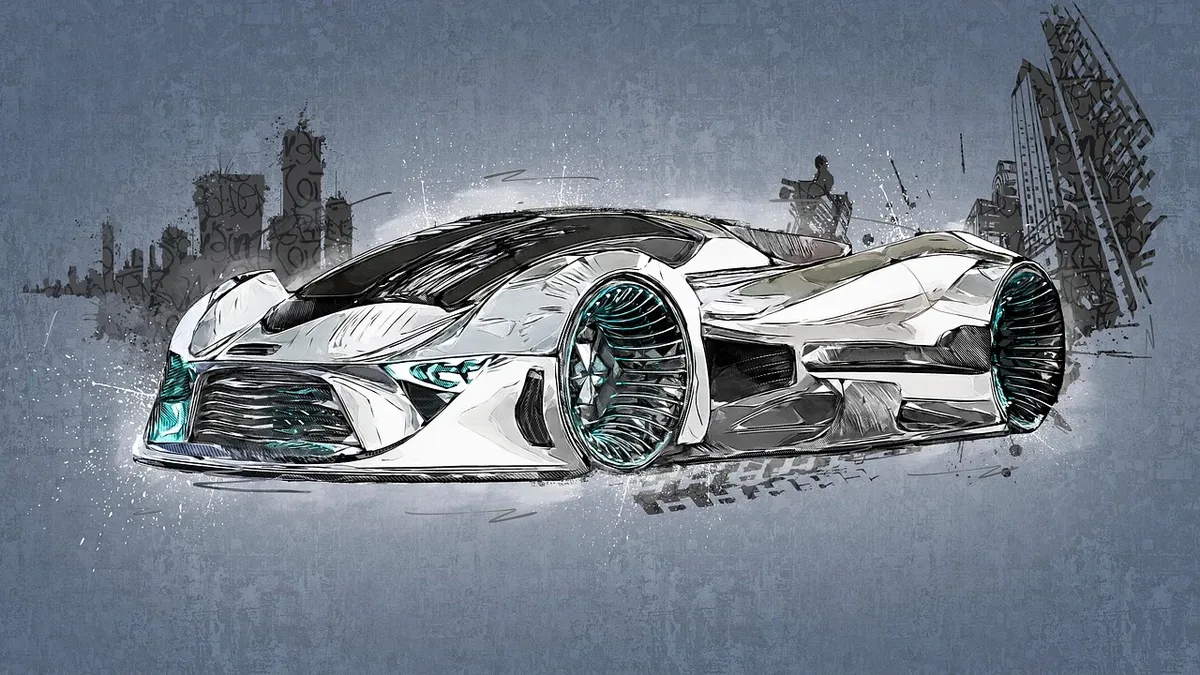
Lancia unveiled the Diàlogos concept car at the 1998 Turin Motor Show. The nearly five-metre saloon was intended to preview the brand's design language for the new millennium and reconnect with its 1950s heritage.
Design and Styling Influences
The Diàlogos broke from the angular shapes of its predecessors, the Thema and Kappa. Chief designer Mike Robinson led the project, with Pietro Camardella and Marco Tencone shaping the exterior and Flavio Manzoni responsible for the interior. Ermanno Cressoni provided finishing touches to the exterior. The design fused two contemporary trends: biomorphic forms and retro styling.
The car's most defining feature was its shield-shaped chrome grille, or scudo, inspired by the 1950s Aurelia. This front-end treatment, including diamond-shaped headlights and a sculpted bonnet, became Lancia's signature look throughout the 2000s, from the Ypsilon to the Thesis. The concept also featured oppositely hinged coach doors, a nod to 1950s Lancia saloons, and slim, angled tail lights likely inspired by the 1955 Florida concept or the Flaminia. Together with large chrome wheels, it created a retro-futuristic look.
A High-Tech, Y2K Interior
Inside, the Diàlogos presented a vision of futuristic luxury. A central joystick up front and one at each seat were the primary controls. The front joystick operated the infotainment system, on-board computer, and cruise control, supplementing voice commands. The study also featured an intelligent radar-based speed-regulation system on paper.
Steering was handled by a U-shaped control element instead of a traditional wheel. Each passenger could adjust their own micro-climate, controlling air conditioning, light, and sound, with a dedicated stick. Rear-seat entertainment was provided by two retractable screens and headphones built into the head restraints. Front seats swivelled 90 degrees for easier access, and all seating was trimmed in nubuck.
Technical Vision and Legacy
Notably, the Diàlogos concept had no engine. The focus was purely on aesthetics. The planned drivetrain concept involved variable power split between both axles. The chassis paired an active differential with a fully adaptive multilink suspension at both axles, built around virtual pivot points designed to improve ride comfort over rough surfaces.
The design language previewed by the Diàlogos reached production in the Lancia Thesis flagship. The Thesis inherited the concept's striking face and arc-shaped tail lights. Built between 2001 and 2009, fewer than 17,000 units of the Thesis were produced, making it a rarity today. Contemporary luxury buyers largely rejected it, though it has since gained appreciation among connoisseurs as a modern classic.
The smaller Ypsilon, using the same design language, became the best-selling Lancia ever. The 2008 Delta, however, was a commercial flop. The Diàlogos did not herald a new golden age for Lancia. Instead, it marked the beginning of a full-blown collapse for the once-proud marque, which survived for years almost solely in Italy on the strength of the Ypsilon.