Jensen Interceptor GTX Track Car Unveiled
Jensen International has unveiled the Interceptor GTX, a new 950-horsepower track car prototype. The company plans to gauge market interest before developing road-legal versions.
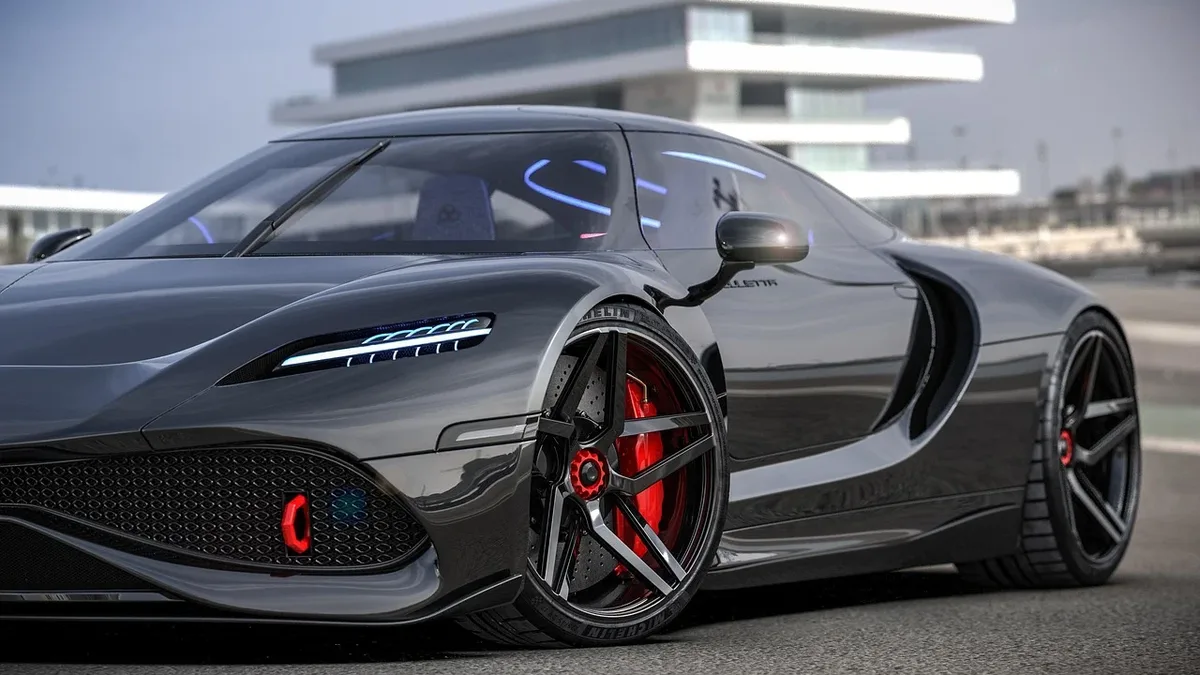
Jensen International has unveiled the Interceptor GTX, a new track-focused prototype. The car is powered by a 6.8-liter boost V-8 producing around 950 horsepower.
The GTX represents a new direction for the brand, known for its grand tourers. Company backer Jeff Qvale and Jensen International boss David Duerden explained the strategy in an interview with Hagerty. The track car is described as a pragmatic starting point to test the market before developing road-legal models.
"A track day car is kind of odd for Jensen to have, but it's really just a starting point," said Qvale. His father once owned the Jensen factory. Duerden added that building a track car was cheaper and quicker, allowing them to create a tangible product. The plan includes eventually developing two road cars: a four-seater GT and a street-legal version of the GTX.
Design and Construction
The GTX's bodywork is hand-formed in aluminum and finished in a blue paint named after Formula One driver Fernando Alonso. The design includes nods to the original Interceptor, such as a floating roof effect. Polycarbonate is used instead of glass, and aerospace-grade bolts are visibly fitted throughout the exterior.
The interior is currently configured for racing. It features exposed carbon fiber, a full FIA-spec roll cage, a plumbed-in fire extinguisher, and fixed-back Tillett race seats with six-point use. Motec race car controls and instrumentation are fitted.
Powertrain and Performance
The engine is a heavily modified GM LT unit. Texas-based Late Model Engines bores it out to 6.8 liters and fits new internals, CNC-machined heads, titanium valves, and a 2.65-liter Roots-type supercharger. The company says only about 20 percent of the original parts remain.
Power is sent through a carbon fiber prop shaft to a rear transaxle by Samsonas Motorsport. The prototype uses a six-speed sequential gearbox, but other transmissions could be fitted. The chassis is a bonded, extruded aluminum platform with double wishbone suspension and Nitron dampers.
| Component | Specification |
|---|---|
| Engine | 6.8-liter boost V-8 |
| Power Output | ~950 hp (configurable to ~1200 hp) |
| Supercharger | 2.65-liter Roots-type |
| Transmission | Samsonas rear transaxle (6-speed sequential in prototype) |
| Chassis | Bonded, extruded aluminum |
| Wheels | 20-inch Vossen custom aluminum |
| Tires | Michelin Pilot Sport |
| Brakes | AP Racing system with programmable ABS and steel discs |
Market Strategy and Pricing
Jeff Qvale is realistic about the business prospects. He stated his aim is not to make money immediately but to determine if there is demand for 10, 20, or 50 cars. To date, approximately £1.3 million has been invested in the program.
While final pricing is not settled, David Duerden suggested a figure around £850,000. Qvale confirmed the car would be expensive but not cost a million pounds. The company now plans to hone the car on track and gauge public and investor reaction.
"We want to see what both consumer and investor sentiment is," Duerden concluded. The GTX prototype, with its aggressive aerodynamics and thunderous engine note, serves as a physical starting point for Jensen's potential revival.