Evante Sports: Rare Lotus-Elan-Inspired Car
A 1988 Evante Sports, built by Vegantune, was a limited-run re-engineered Lotus Elan featuring a 1.7-liter twin-cam engine, 720-kg weight, and 140-160 bhp. The article traces its origins, design, performance, production history, and current sale status.
The Evante Sports, a 1988 model built by Vegantune, was produced in limited numbers as a re-engineered Lotus Elan. George Robinson’s Vegantune operation created the car, which weighed 720 kg and was powered by a 1.7-liter twin-cam engine producing 140-160 bhp.
Origins and Design
The concept emerged when George Robinson, a former BRM Grand Prix engineer, decided to address the Lotus Elan’s shortcomings by building a new car from scratch. In 1982 he unveiled the Evante at a launch event, pricing the kit at £9,750 and promising production the following spring. The design retained the Elan’s iconic doors, windscreen, and pop-up headlamps-now electric for reliability-but replaced the chassis with a custom epoxy-coated steel backbone and double-wishbone suspension. Ford Sierra drivetrain components supplied the gearbox, differential, and driveshaft, while Girling 10-inch disc brakes were fitted at all four corners.
Engine and Performance
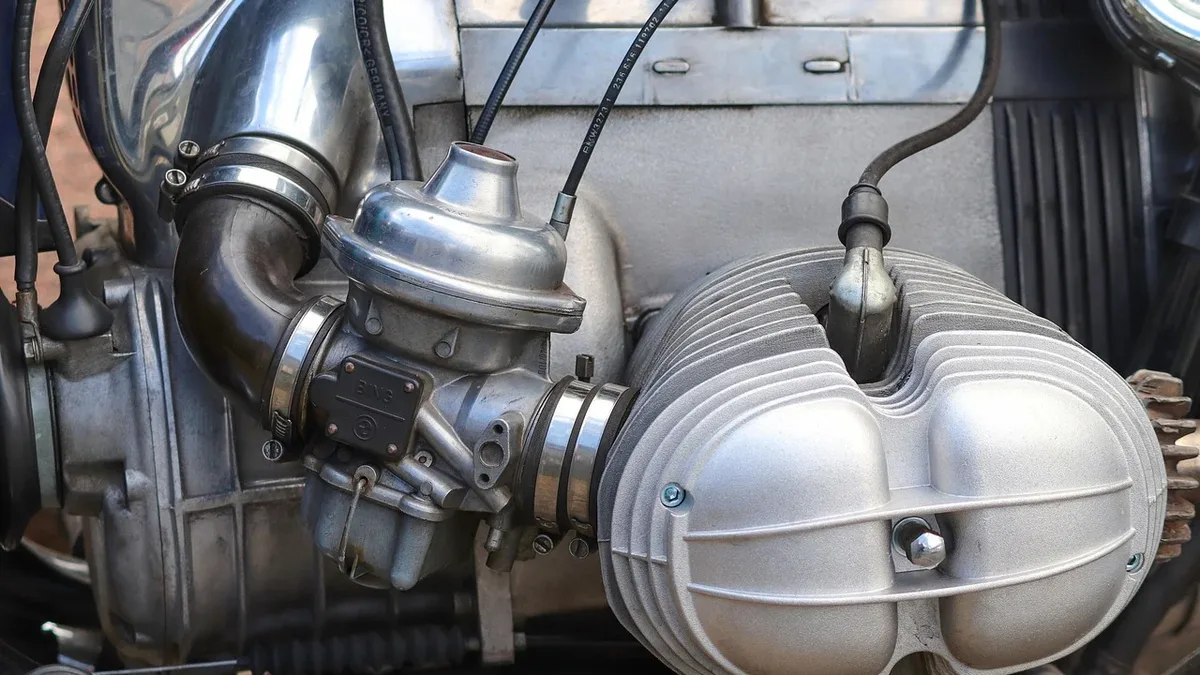
Vegantune’s own Type A twin-cam engine evolved from the Ford Kent “225E tall block” bottom end. The 1.6-liter version, equipped with twin Dell’Orto 40DHLA carburettors, produced 140 bhp in standard tune or 160 bhp when fitted with larger ports, high-lift camshafts, and a raised compression ratio from 8.5:1 to 10.5:1. In 1988 the displacement was increased to 1,699 cc, maintaining 140 bhp at 6,500 rpm and 129 lb-ft torque at 3,000 rpm for the standard 140TC, while the uprated Evante 160 delivered 160 bhp.
| Item | 1.6 L VTA | 1.7 L VTA | Evante 160 |
|---|---|---|---|
| Power (bhp) | 140 | 140 | 160 |
| Displacement (cc) | 1,600 | 1,699 | 1,699 |
| Torque (lb-ft) | 129 | 129 | 129 |
| Weight (kg) | 720 | 720 | 720 |
| 0-60 mph (s) | 6.4 | 6.4 | 6.4 |
| Top speed (mph) | 132 | 132 | 132 |
The factory claimed a curb weight of 720 kg, a 0-to-60 mph time of 6.4 seconds, and a top speed of 132 mph. Evante publicist Graham Arnold asserted that the 160’s power-to-weight ratio of around 200 bhp per tonne matched that of the Porsche 944 Turbo and the Ferrari Testarossa.
Production History
Production finally began in September 1986, more than three years behind schedule. The first full year of production was 1987, during which 40 cars were completed-26 of them exported. Type approval was secured for Japan and Germany, and the British price, after tax, was £14,887.70. Mike Cotton, testing the Evante for Motor Sport in early 1988, described it as “a wonderful reincarnation of Colin Chapman’s best-loved product.”
The market for the Evante was short-lived. The 1989 arrival of the Mazda MX-5 and Lotus’s revival of the Elan name on the front-wheel-drive M100, combined with high pricing and a saturated classic-car market, led to the company’s collapse in 1991 after 106 cars had been built.
Afterlife and Current Sale
After Evante Cars folded, the design was acquired by Newark-based Fleur de Lys, which produced a Mk 2 with a wider body, a Ford 1.8-liter Zetec engine, and Volkswagen Golf tail lights. Only nine Mk 2s were completed before Fleur de Lys shut its vehicle arm in 1994.
Today, a 1988 Evante Sports equipped with a 1.7-liter Vegantune engine, a Ford Sierra-sourced 5-speed manual gearbox, adjustable coilovers, and a performance cylinder head is listed for sale in Queensland, Australia. The car, finished in metallic green with a bone-leather interior and walnut trim, has 30,790 miles on the odometer and is accompanied by a soft top and two ignition keys. The listing can be viewed at the provided link.